
Six covers from the British edition of Harper’s Bazaar, dating from 1930 to 1959, have inspired six exclusive upholstery fabrics for FRAME. Their journey from magazine page to contemporary interiors opens a wider conversation about how ideas are reinterpreted, and how personal style finds expression in the home.


The starting point was an archive, but the question was very much about the present. What can images created decades ago tell us about contemporary design now?
It is a question that runs through FRAME, our new collection of contemporary furniture and fabric, and one that the Harper’s Bazaar collaboration brings into particularly sharp focus. The archive offered something more interesting than a set of period styles to revisit: a record of how a magazine has repeatedly looked at its own moment and found new ways to express it.


Every one of the six covers was once new. A 1930 fashion illustration and a 1959 photograph may speak very different visual languages, but each belonged to a magazine looking closely at its own moment and finding a distinctive way to express it.
For Lydia Slater, Editor-in-Chief of Harper’s Bazaar, that idea remains central today. “Contemporary for us is about being alert to the present without being dictated by it,” she says. What matters is understanding what is changing while continuing to value substance, beauty and things that endure.


An editorial eye that keeps changing
Look across the six covers and the changes are striking. In the 1930s, Léon Benigni’s illustrations brought stylised figures, decorative line and the influence of modern art to the magazine’s fashion imagery. By the 1950s, Richard Dormer’s photography brought a different kind of immediacy, with clothing, models and location all playing a part in the composition.
That evolution matters. Harper’s Bazaar has never depended on one fixed visual formula. Lydia describes its outlook as “highly edited, visually assured, and culturally curious”, with fashion sitting in conversation with art, photography, literature, design, interiors and travel. What persists is not a particular aesthetic so much as the confidence to keep looking at the present afresh.
It was this combination of continuity and change that made the archive such fertile ground for FRAME.

Six covers, six points of departure
“Inspiration rarely occurs in a vacuum,” says our founder and design director, Andrew Cussins. Looking through the Harper’s Bazaar cover archive, he was particularly drawn to the fashion photography of the 1950s and to “the confidence and sense of possibility in those images”. What interested him most was how those references might find a new expression through fabric.
The six resulting designs begin with very different details. On Léon Benigni’s May 1930 cover, the rounded form of a hat and the pearls at a model’s neck become the starting point for Harper’s Bazaar Spheres, enlarged and reworked as overlapping circles.


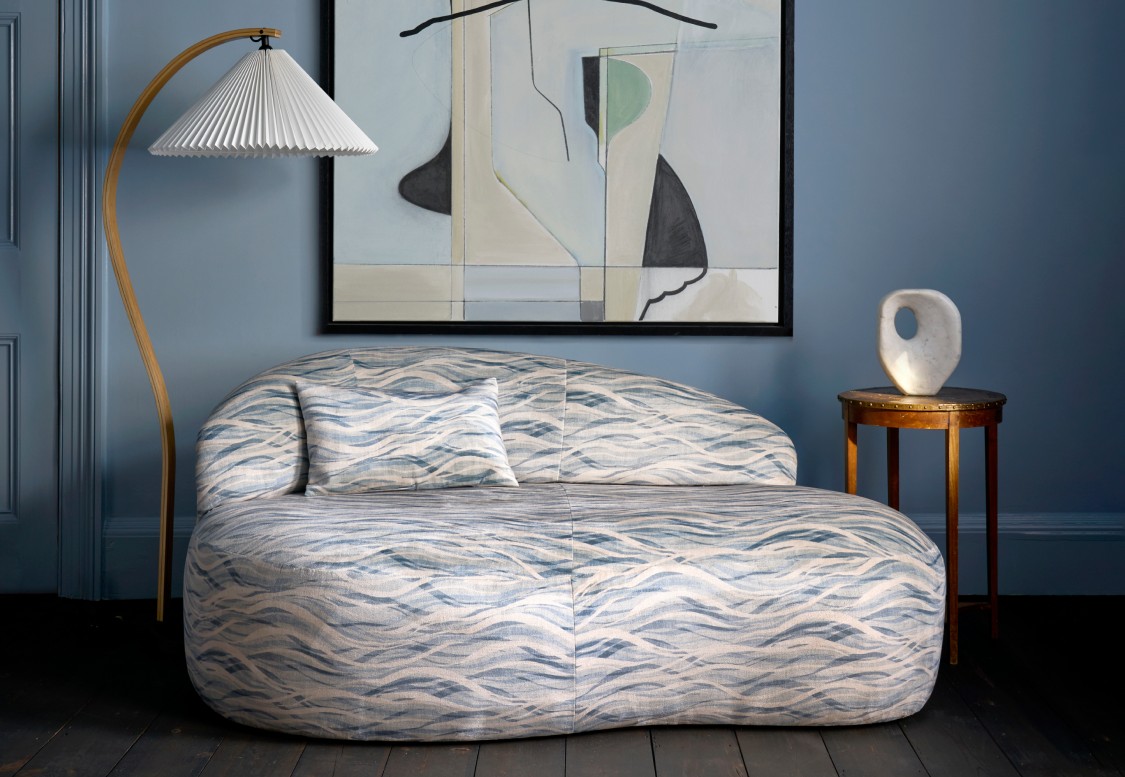
Begnigni's May 1935 illustration offers another graphic cue: the framing lines of a balcony rail and dotted festoons are distilled into the abstract pattern of Harper’s Bazaar Rhythm.


Richard Dormer’s photography provides the source for the remaining four designs. Harper’s Bazaar Palette draws on the relationship between colour and fabric in his February 1951 cover, translating it into large geometric blocks.


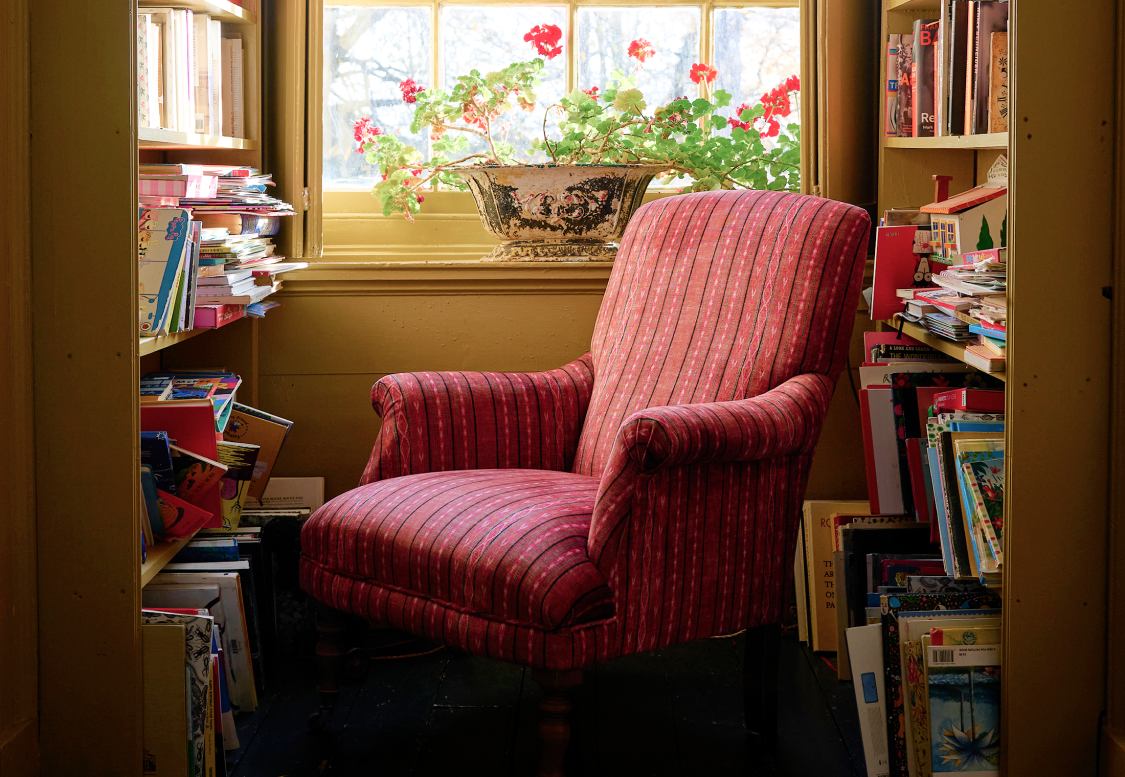
A striped fashion detail from his January 1952 photograph of model Shelagh Wilson among the temple ruins of Agrigento, Sicily, becomes Harper’s Bazaar Stripe. The assuredness of the original image carries through into the fabric, with varied widths, expressive colour and a confident graphic character.


Two 1959 covers complete the collection. Harper’s Bazaar Palm takes its cue from the sweeping decorative fronds of Dormer’s May cover, photographed on location in India with BOAC for the magazine’s ‘Flight of Fashion’ issue. Enlarged and layered into repeat, they become a bold botanical pattern with depth and a strong graphic presence.


Harper’s Bazaar Houndstooth begins with the tailoring featured on his January cover, carrying one of fashion’s most recognisable patterns into upholstery in both printed and woven form.


A new expression
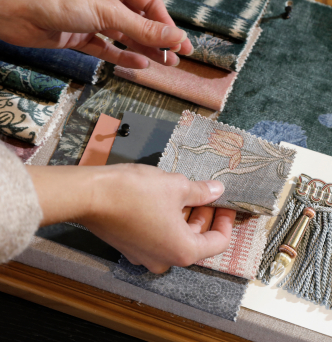
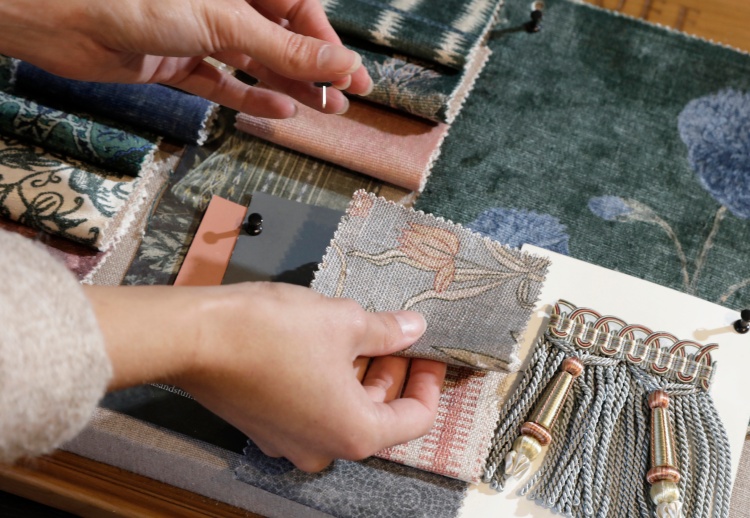
Translating a cover into upholstery is not simply about lifting a motif or reproducing a detail. It is about identifying what gives the image its particular character: what it shows, but also the mood, confidence or attitude it conveys. Scale, repeat and colour then become part of the interpretation, allowing that character to find a new expression in fabric.

The aim was never to recreate the covers exactly. Some details are enlarged or simplified, others become more abstract, and colour can be rebalanced for a new context. What remains is a connection to the original image, but with enough freedom for the fabric to have an identity of its own.
For Andrew, that freedom is part of the appeal of working with textiles. “I’ve always loved the way textiles can completely change the character of a piece of furniture, and give people the freedom to make it their own.”

There is a natural connection here with the way Harper’s Bazaar thinks about personal style. Lydia introduced the magazine’s Living section under her editorship, reflecting her belief that interiors are “an extension of personal style”. Someone who cares about the cut of a jacket, she observes, will also care about the spaces they live in and the objects they choose to surround themselves with.
Looking back does not have to mean looking backwards. That idea reaches beyond the six fabrics and into FRAME as a whole. Our approach to contemporary design is not about rejecting what has come before, or prescribing one particular look. It is about exploring new forms, proportions, colour and pattern while holding on to the comfort, craftsmanship and freedom to personalise that have always shaped Sofas & Stuff.
For our CMO, Ricky Partner, that freedom is fundamental. “Contemporary isn’t a look. It’s a form of self-expression.” FRAME gives that idea room to play out: seven new furniture designs sit alongside original prints, the six Harper’s Bazaar fabrics and a wider collection of plains and weaves, creating possibilities rather than a single prescribed version of contemporary living.

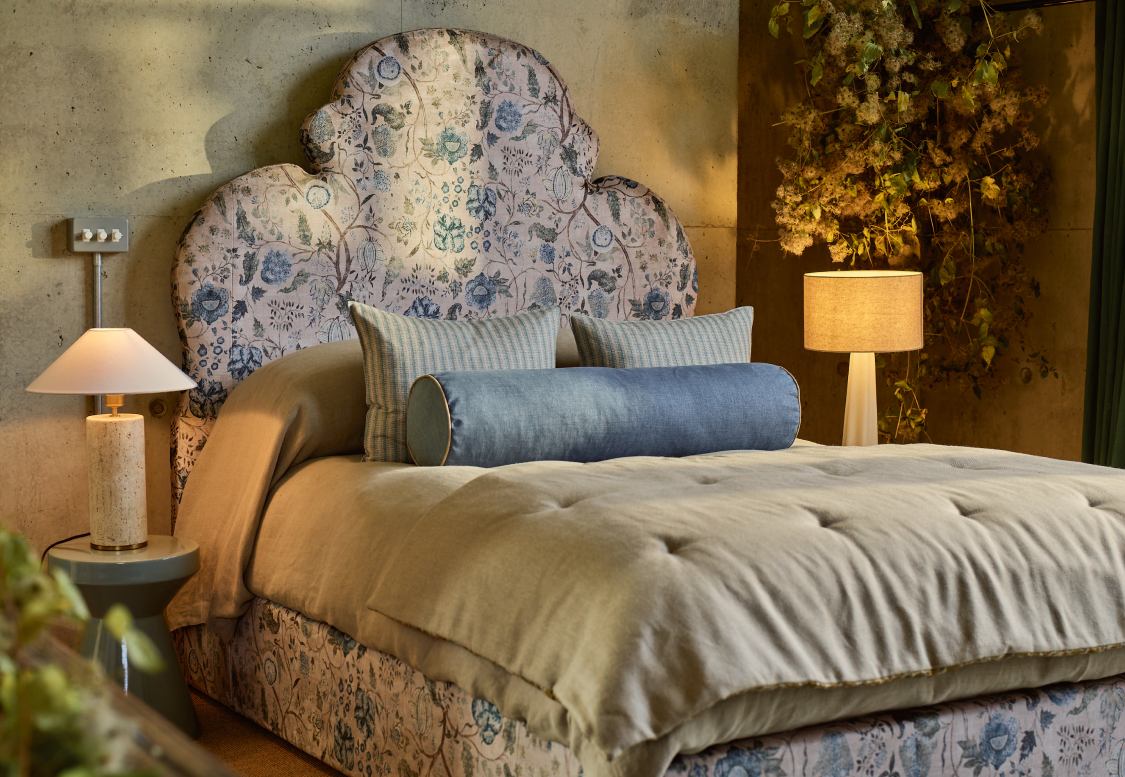
The six Harper’s Bazaar fabrics are one expression of that freedom. Each begins with a cover from the middle decades of the twentieth century, but none is bound by its source. Line, pattern, colour and mood are reinterpreted in fabric, then changed again by the furniture they cover and the room in which they sit.
The archive gave the collaboration its starting point. The final expression belongs to the person who lives with it.


